
keynotes that get the right work done

Relentless prioritization. Sustainable habits. Healthy results.
Fewer, better meetings. Faster decisions. Focused teams that keep their energy. Certified pro. Fun onstage. Practical from slide one.
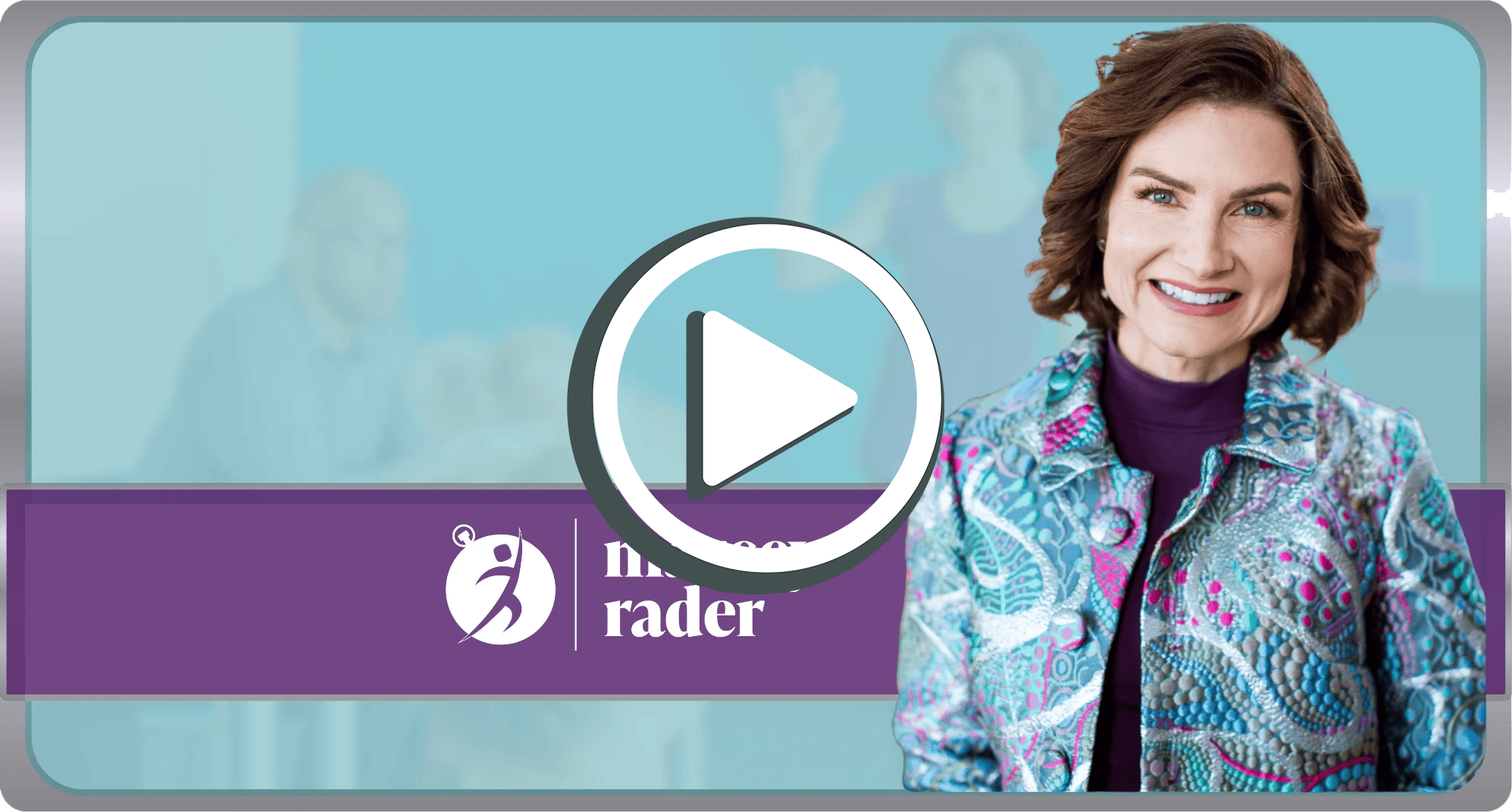
Speaker Reel
"Delightful blend of fun and professionalism."
Marcey's received the highest scores for the 93,000+ members she's trained. Working with her is a delightful blend of fun and professionalism. In a sea of talent, she's a lighthouse, guiding and enlightening all who can learn from her.

scott zarret
President, CPA Academy
“She is consistently excellent.”
Marcey Rader is a dream presenter and rock star on the stage. Planning events with new content and presenters can be risky. Marcey is the person you book to balance that risk. She is consistently excellent.

linda dodd
Conference Content Specialist, North Carolina Association of CPAs
"Timely, prepared, and flexible."
Marcey Rader is an amazingly talented speaker; her flow of content, cadence of voice, smile on her face, and ability to relate to the audience are incredible. She builds bridges to ensure that the content will resonate. Most importantly, Marcey is timely, prepared, and flexible.

eva keidel
Event Producer







the relentless pursuit of more
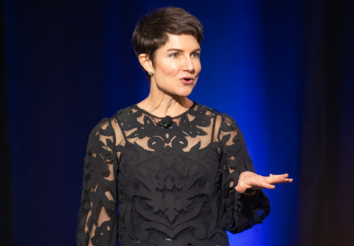
Watch this powerful, humorous and vulnerable TEDx talk...does more really equal more?
"Profound. Provocative. Powerful."
One of the most masterful deliveries of self-discovery and enlightenment I've seen in years. Profound. Provocative. Powerful.
Olalah Njenga, CEO and Chief Strategist, YellowWood Group

Watch: The Right Things First (mini keynote 14 min)
most popular topics
Marcey's focus is on relentless prioritization and sustainable habits. Virtual or in-person, every presentation is tailored to meet your organization's or event's specific needs, helping you achieve your desired outcomes.
Your team already knows what matters. The problem is choosing it when it counts.
The meeting runs long again, and everyone stays. A request lands, and nobody has the nerve to turn it down. The project nobody believes in gets a better tracker, a cleaner process, and another quarter of funding, because stopping it feels harder than continuing.
The Right Things First runs on one idea: relentless prioritization beats endless optimization. Every time.
Takeaways
- How to spot a team polishing the workaround while the real problem stays put.
- Six questions: three that find the real bottleneck, three that test whether a fix earns its place.
- A documented bottleneck process and a gatekeeper who isn't guessing, for when someone's out.
- A gut check: if someone followed you for three days, would they see your stated priorities?
- One guardrail, written in the session: "When ___, I ___."
Who it's for: Teams and leaders at any level.
Format: Keynote. Pairs naturally with Reclaim Your Workday as a follow-up working session.
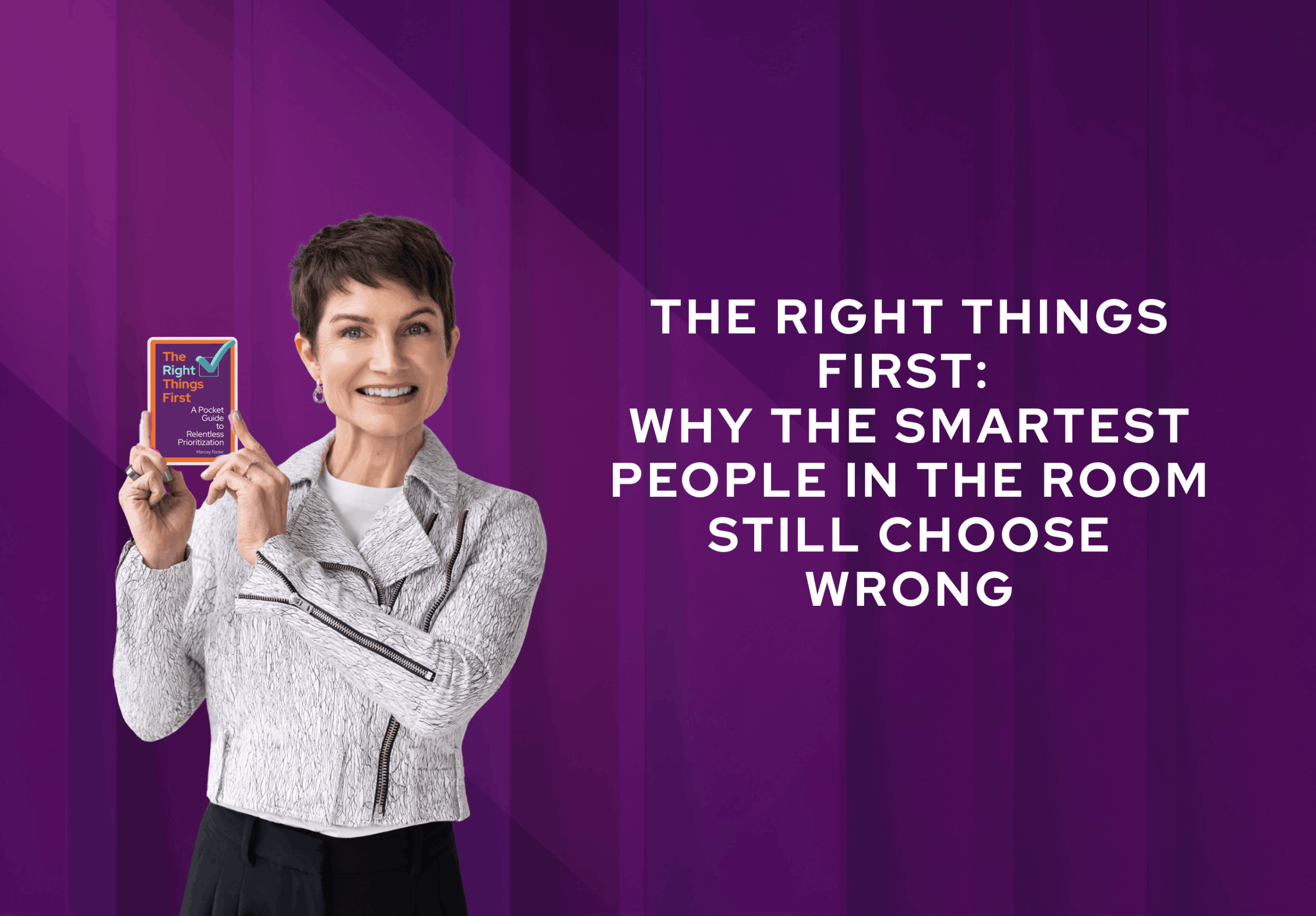
Companion to the book: The Right Things First: A Pocket Guide to Relentless Prioritization, by Marcey Rader.
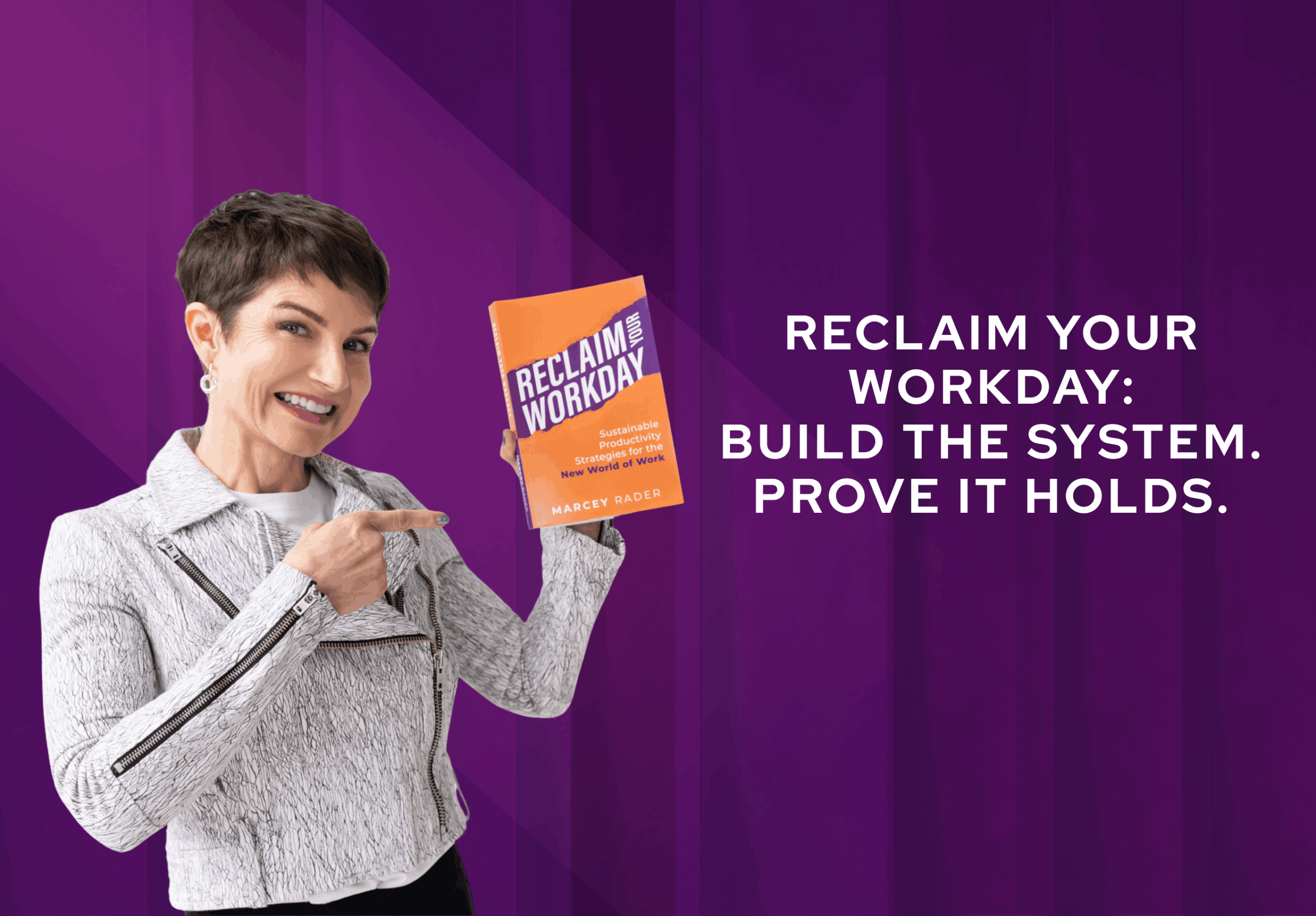
A system for running your week, stress-tested against the day you're not there.
Friday, 4:45. The week is gone, and it's hard to name what got finished. The best hours went to email. The report that mattered got the leftovers again, at 7 p.m.
Then someone takes a day off, or disappears into a deadline, and three decisions sit waiting for them, because they were the only one who knew where things stood.
Reclaim Your Workday builds a system to choose what gets done and when, then tests it on the day someone's out.
Takeaways
- Task Batching, Theme Days, and a daily top three, chosen from the year down.
- The stress test: how long the team could run before coverage gaps and lost institutional knowledge start costing real money.
- A documented bottleneck process and an escalation grid, so the gatekeeper isn't guessing.
- Each attendee's part in keeping it running: clean handoffs, the right people alerted, and a real disconnect.
- A live action plan, built in the session.
Who it's for: Managers, team leads, and anyone who covers for a colleague.
Format: Workshop or training.
Companion to the book: Reclaim Your Workday by Marcey Rader
Every ring, ping, and buzz costs more than you think.
You sit down at 9:00 to write the one thing that matters today. At 9:04, a chat. At 9:06, an email you'll answer real quick. By 10:00, you have one paragraph, and the whole morning feels busy.
This session shows where attention actually goes, then gives leaders and teams practical tools to protect it.
Takeaways
- Why every interruption costs more than it takes.
- The dopamine pull behind every notification, and why "just a quick check" rarely stays quick.
- What multitasking actually costs, and what to do instead.
- Practical tools to protect focus, including working alongside someone else, which helps almost anyone stay on task.
- One guardrail, chosen and committed to before the session ends.
Who it's for: Teams and leaders whose day runs on pings, chats, and inboxes.
Format: Keynote, breakout, or training.
Pairs with: Tame Your Inbox, a standalone session on filters, templates, and communication norms.
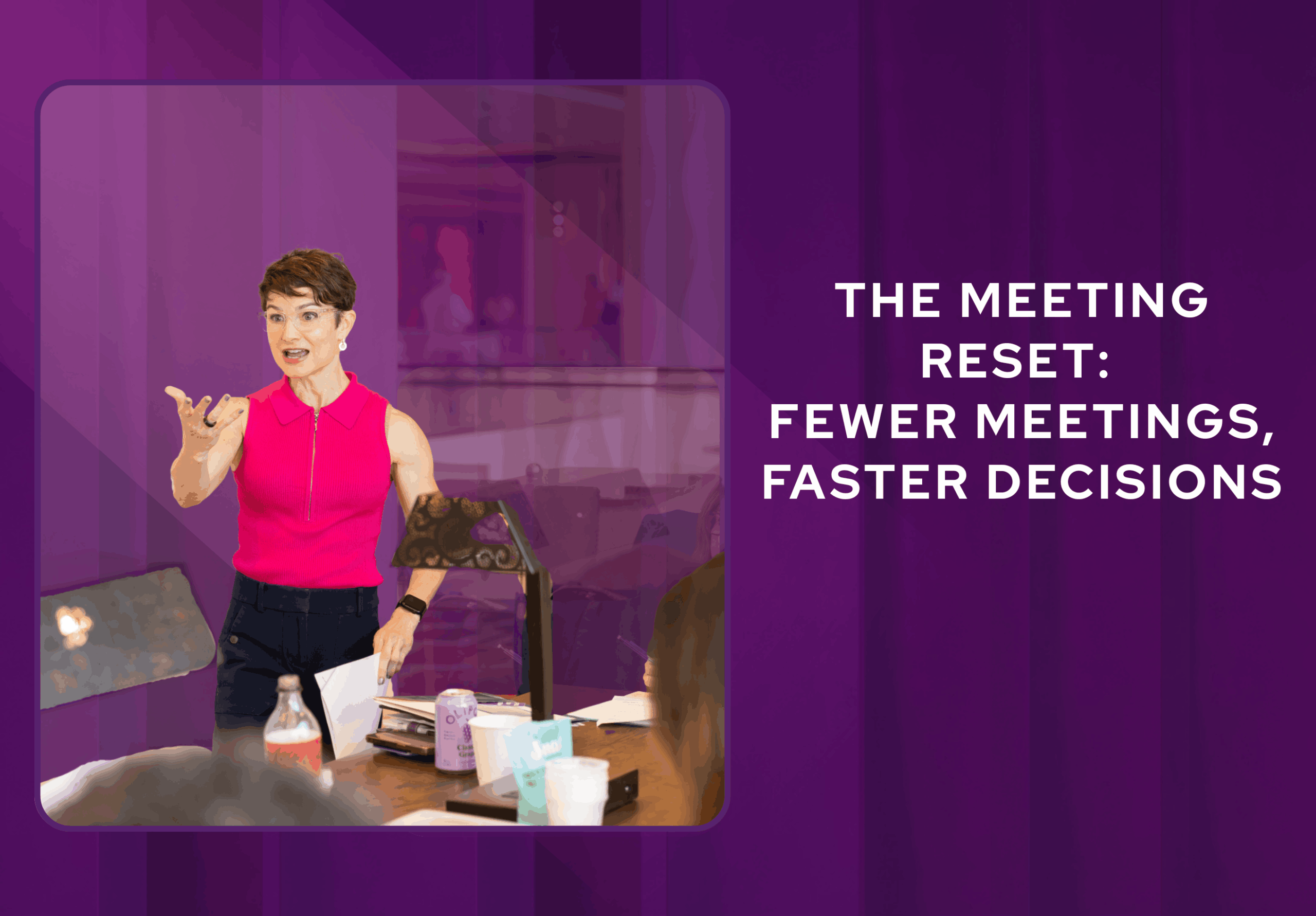
Kill it, shrink it, or keep it: a decision for every meeting eating your calendar.
The weekly meeting got shortened from 60 minutes to 50. The agenda got tighter. One person came off the invite. Nobody asked whether the meeting needed to happen at all.
Meanwhile, the deck arrives during the meeting, action items leave with no names attached, and there's no room left on the calendar for the work the meetings were supposed to move.
The Meeting Reset gives every recurring meeting a three-way decision: kill it, shrink it, or keep it, and sets up the ones that stay to run well.
Takeaways
- A clear filter for deciding whether a meeting needs to exist.
- The real cost of meetings, and a system for right-sizing who's in the room and how long it runs.
- Facilitation tools that keep discussion moving without shutting anyone down.
- A guardrail for staying present that respects how different people focus.
- Kill it, shrink it, or keep it, applied live to one of their own meetings.
Who it's for: Teams and leaders who own recurring meetings, and everyone who sits in too many of them.
Format: Keynote, breakout, or training.
Pairs well with Virtual and Inclusive by Design, a standalone session on hybrid meeting equity and neuro-inclusive practice.
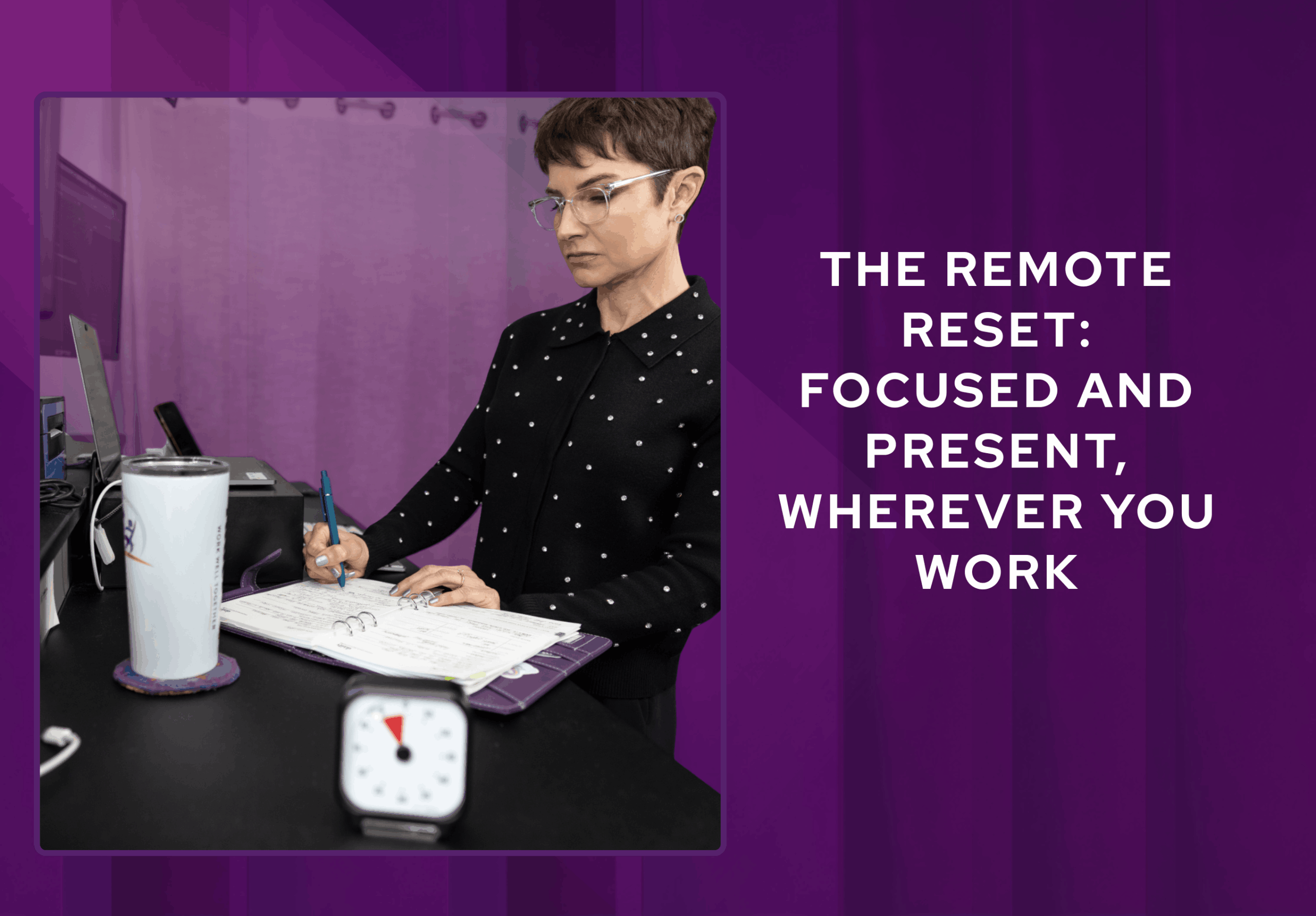
Get credit for the work you do, in a remote workday that actually ends.
A message goes out at 7:40 a.m., so people know you're online. The mouse gets a nudge to keep the status green. At 8 p.m., the laptop is still open on the kitchen table, because nothing told you the day was over.
Remote work creates two problems an office never had, and this session addresses both: making work visible and letting the day end.
Takeaways
- Proximity bias is measurable, and looking active is different from being effective.
- The two distinct risks in remote work, isolation and an always-open workday, and why they need different fixes.
- Real guardrails for disconnecting: transition rituals, screen-free time blocks, and clear availability with the people around you.
- A DND signal people actually respect.
- One guardrail, chosen live, ready to test.
Who it's for: Remote and hybrid team members, and the leaders who set their norms.
Format: Keynote, breakout, or training.
Pairs well with Leading a Team You Can't See, a standalone session on proximity bias, delegation, and remote coaching.
Learn Why Remote Leaders Need to Stop Being Reactive
looking for marcey's media kit with bios, photos, and more?
Looking to turn your team into high-performers?

marcey's promise
to You and Your Event

To send everything you need in advance.
To be the easiest speaker you've worked with.
To be a true event partner.
To make you look like a rock star.
what's a CSP?
Think of it as the Michelin Star for speakers.
Only about 700 speakers worldwide hold this designation, awarded by the National Speakers Association. You can’t apply with clever branding or a viral reel. You have to prove your consistency, client impact, and commitment to the craft—year after year.
Why it Matters to You:
- You’re hiring someone with a verified track record.
- It lowers your risk and raises your odds of audience success.
- It’s not just about being motivational. It rewards results, not applause.
Why it Matters to Me:
- Speaking isn’t a side hustle. It’s my profession.
- I've put in the reps: over 480 paid talks, ethics training, client reviews, and rigorous video critiques.
- I continually improve and learn from other high-caliber speakers.
Requirements
- 250+ paid presentations
- Ethics courses
- Positive assessments and reviews by 20+ clients
- $50k+ yearly income from speaking for five years
- Critique of two 45-60 minute speaking videos
- Board of Director approval
When you hire a CSP, you're getting more than a mic drop. You're getting peace of mind.
speaking awards
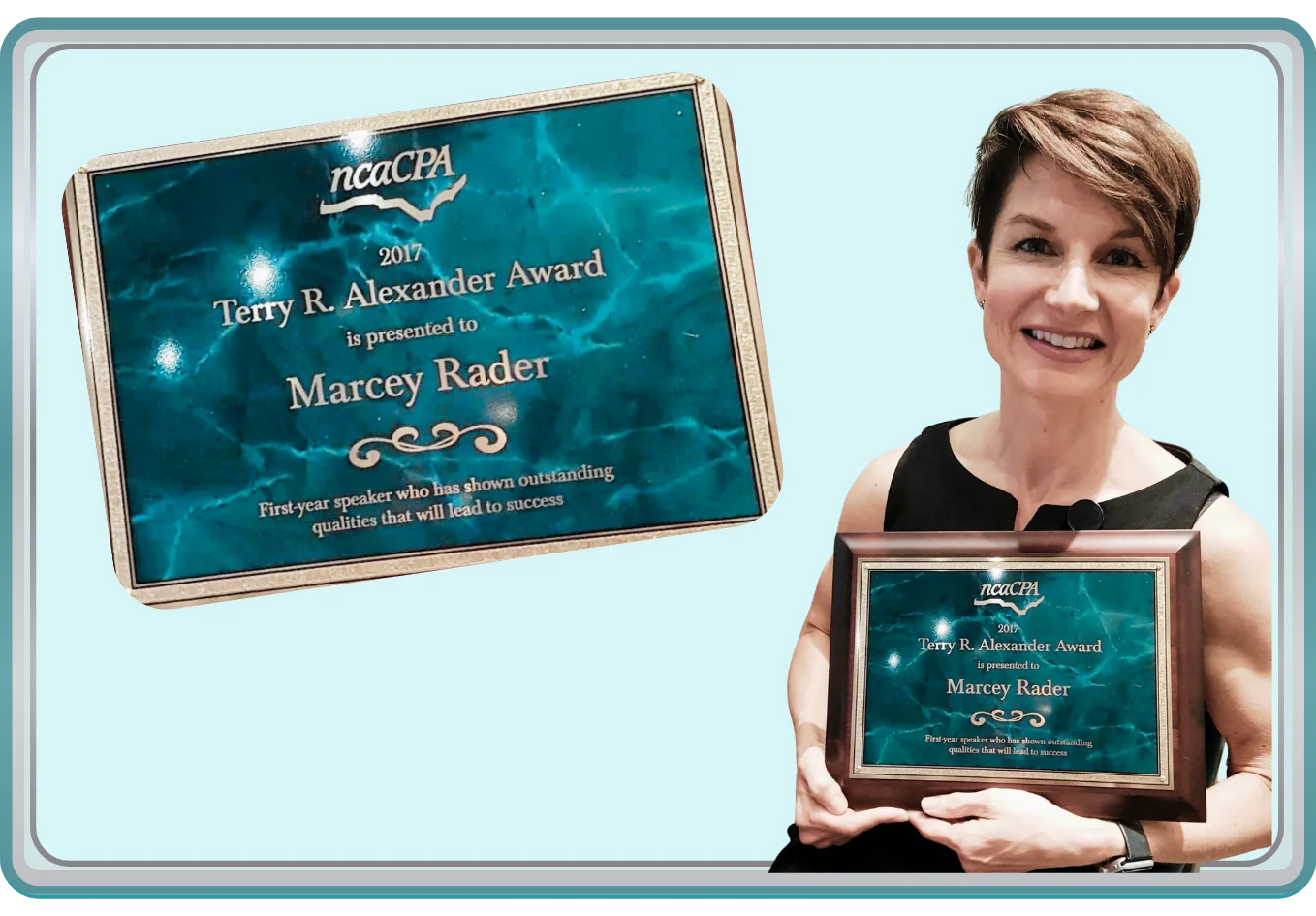
NCACPA Terry R. Alexander New Speaker Award
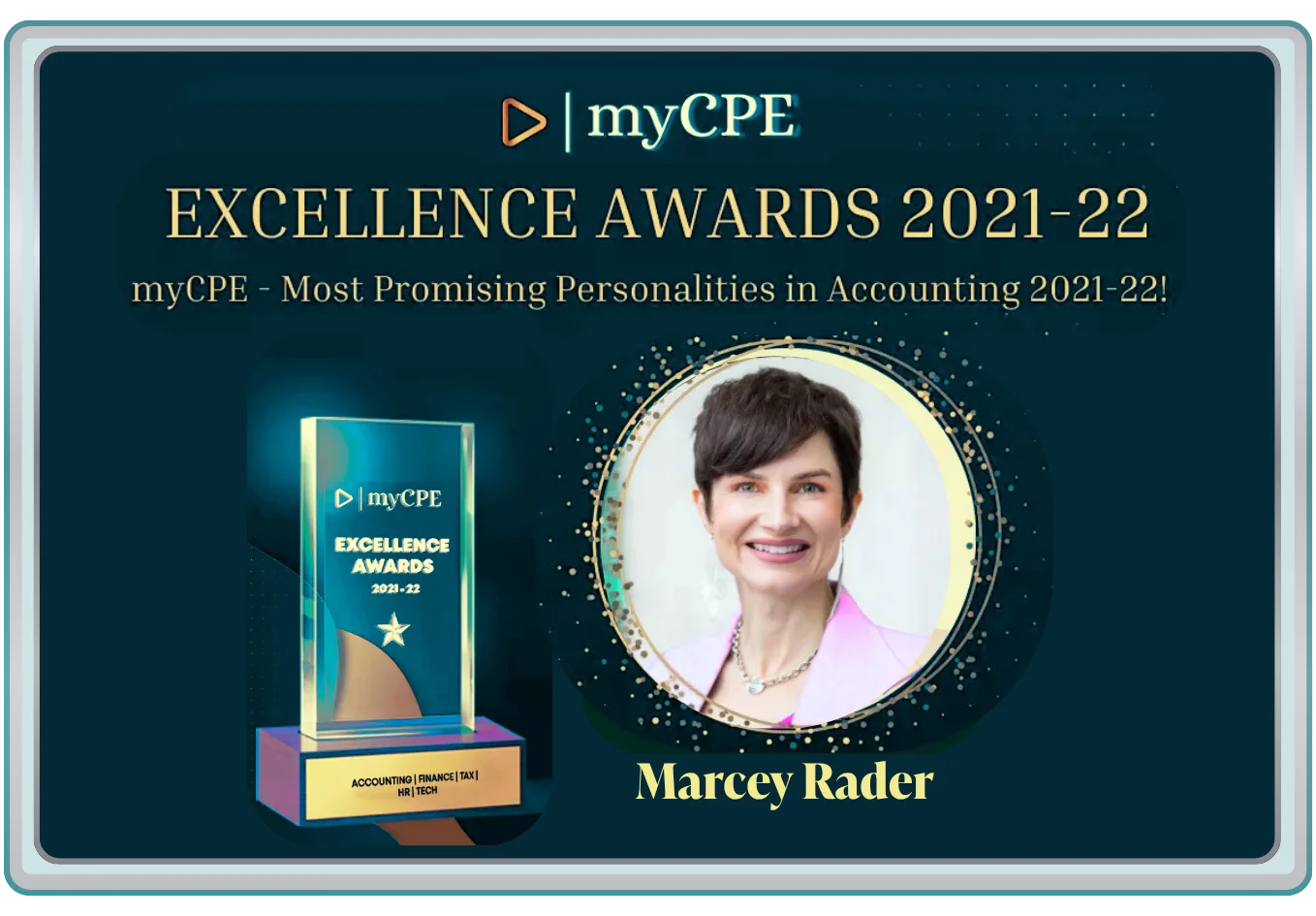
MyCPE Most Impactful Woman Leader and Most Promising Personality Awards
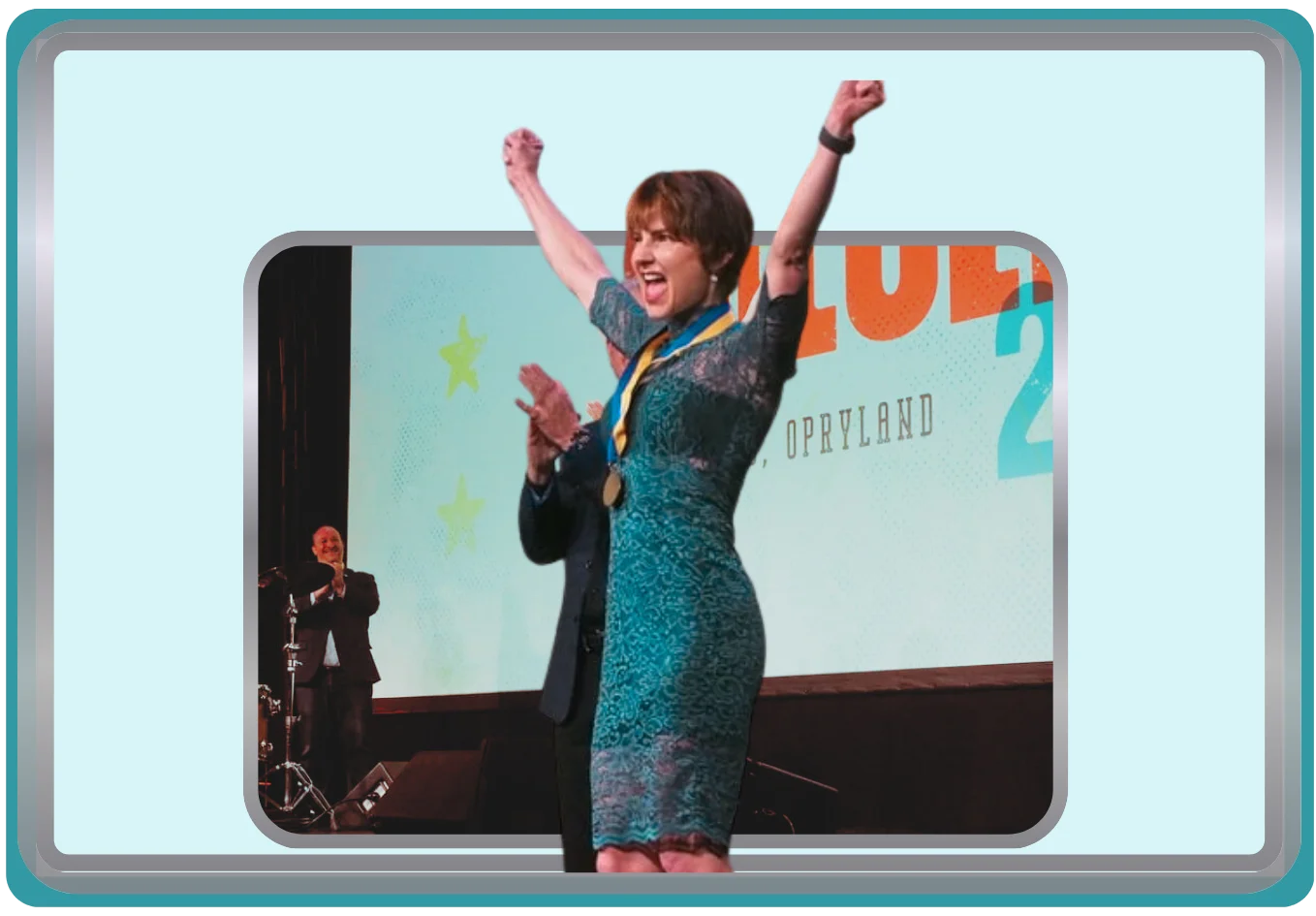
CPA Academy Top Presenter Award out of over 1,750 speakers
let's go virtual.
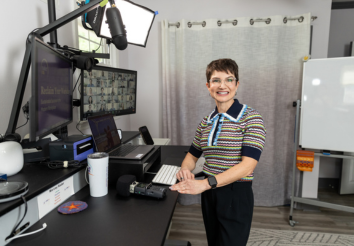
I have a complete virtual studio and am an eSpeakers Certified Master Virtual Presenter®.
The Health-Powered™ Productivity podcast by RaderCo.
With 125+ episodes, this podcast delivers short, practical episodes on prioritizing what matters, taming meetings and email, and protecting your energy. Reclaim your workday, one habit at a time.